

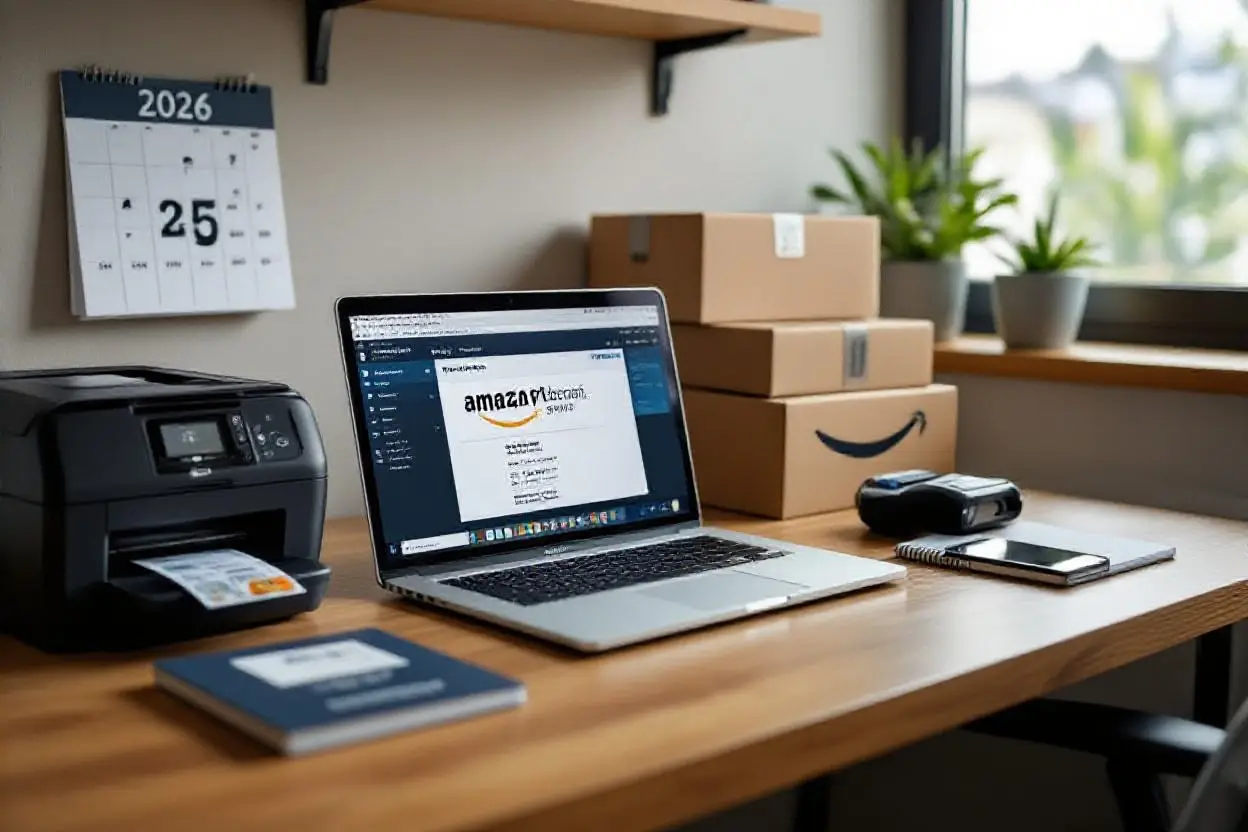
Amazon, ever thought you could turn a few hours and a little cash into a real online business? You’re about to get a straightforward playbook – what to pick, how to launch, and the traps to dodge, because product-market fit is the make-or-break, account suspension can wreck your business overnight, and finding items with big margins is what actually pays the bills. So yeah, you can do this – it’s messy but worth it.
Key Takeaways:
- More than half of Amazon sales now come from third-party sellers, so picking the right niche isn’t just picking a product – it’s a strategy game.
Use tools to spot steady demand, avoid hyper-competitive categories, and validate with small test orders before you commit to big inventory. Trust me, testing cheap beats guessing big every time.
- About 75% of shoppers click items in the top three Amazon search results, so listing quality and early sales velocity matter a ton.
Great images, tight keywords, and honest reviews are what flip a listing from meh to money.
Optimize first, then scale ads.Want conversions? Nail the first impression.
This amazon fba guide for beginners breaks down titles, bullets, and PPC basics so you’re not throwing ad dollars into a leaky funnel.
- Fulfillment and storage fees can chew up 15-35% of a sale, so margin math isn’t optional if you want to stay in business.
Factor in fees, returns, and slow movers before you order – and use simple reorder points so you don’t run out or get stuck with excess stock. Inventory is boring but it wins or loses deals.
No margin, no business.
The amazon fba guide for beginners includes ready-to-use spreadsheet checks and inventory tips to keep cashflow sane while you scale.

Types of Amazon FBA: What’s Out There?
You’ve probably heard the tale of a neighbor who bought 300 silicone spatulas, listed them, and hit $12k in two months – that shows how varied FBA paths play out. You’ll find models like Retail Arbitrage, Online Arbitrage, Private Label, Wholesale, and Handmade, each with different startup costs, margins and risk profiles. Expect Amazon fees to take roughly 15-30%, and fierce competition on low-ticket items; weigh upfront buy-in vs margin and scalability.
- Retail Arbitrage
- Online Arbitrage
- Private Label
- Wholesale
- Handmade / Niche crafts
| Retail Arbitrage | Low startup ($100-500), margins ~10-40%, fast turnover |
| Online Arbitrage | Similar margins to retail, can scale remotely, sourcing tools help |
| Private Label | Higher upfront ($1k+), margins 30-60%, branding and listings matter |
| Wholesale | Requires vendor relationships, buy-in $2k-$10k, steadier volume |
| Handmade / Niche | Lower competition but limited scale, great for unique products |
Different Business Models You Can Try
You once read about a seller who flipped clearance toys for a quick $4k profit in a month, so yeah – arbitrage can be fast cash. You can also build a Private Label brand that scales to $50k+ monthly with the right niche and listings, or pursue wholesale to move steady volume with lower margins. Expect startup ranges from under $500 to several thousand, and use profit calculators to test real-world fees, shipping and potential ROI.
Picking the Right Product Type for You
Someone I know chased small, cheap gadgets and burned out chasing returns; you don’t have to repeat that. You should match product size, weight, price point and competition to your budget and tolerance for risk – small, lightweight items cut fulfillment fees and often sell faster, while larger items can yield bigger margins but tie up cash. Use tools to check BSR, review counts and price history before you commit; prioritize products with modest competition and clear demand.
Digging deeper, evaluate seasonality, average monthly sales and return rates – a product that sells 200 units monthly with a stable price is better than one-time spikes. Consider storing a buffer of capital for pay-per-click testing and at least one replenishment cycle; shipping and storage fees can flip margins fast. Test small batches first, optimize listings, and scale what shows sustained traction while watching Amazon policy and fee changes closely.
Thou weigh fees, risk and scale when choosing the path that fits your goals.

My Take on Amazon FBA Tips: What I Wish I’d Known
You open the Seller Central notice at midnight and see a spike in storage fees after an over-order – gut punch. You also learn PPC eats margin fast, a 30% gross margin can evaporate to 8% after ads and fees, and product photos or wrong prep can cost you returns and bad reviews. Prioritize sourcing with true landed cost, track sell-through weekly, and automate repricing for slow movers. Any small test order beats guessing.
- amazon fba guide for beginners – start with 50-200 units, not pallets.
- test order – confirm photos, packaging, barcodes before scaling.
- monitor fees – calculate referral + FBA + storage into pricing.
Key Tips for First-Time Sellers
You’re staring at product ideas and a budget, wondering where to spend it; here’s what actually moves the needle: run a 30-90 day test, aim for at least a 30% gross margin after landed cost, and keep initial orders small – 50 to 200 units is typical. Use manual PPC with a $5-$15 daily budget to learn keywords, and set lead times 7-30 days depending on supplier reliability. Any conservative test saves you more than a risky bulk buy.
- amazon fba guide for beginners – validate demand with real sales, not guesses.
- small orders – 50-200 units to prove product-market fit.
- PPC testing – $5-$15/day manual campaigns to find winners.
Common Mistakes and How to Avoid Them
You launch a listing, get traction, then watch profit vanish because returns climbed or inventory sat for months – that scenario’s common. Most sellers overorder, skip quality checks, or ignore negative feedback until it’s a pattern; those mistakes cost hundreds to thousands quickly. Audit your supply chain, enforce inspection, and run slow-moving SKU promos. Any quick quality check before shipment prevents costly headaches.
You’ll want specifics: say you order 1,000 units at $2.50 landed each expecting $18 sale price – sounds great until Amazon takes ~15% referral (~$2.70) plus an average FBA fee of $3.50 and returns cost. Your net can drop below break-even fast. So split orders – do 100 units first, inspect 10% on arrival, and measure sell-through; if you sell 60% in 30 days with ACOS under 25% you ramp. Also keep a buffer: keep 2-4 weeks of safety stock for top sellers, and always calculate storage fees for peak vs off-peak months to avoid surprises.
Step-by-Step: Getting Started with Amazon FBA
Compared to juggling packing and returns yourself, Amazon FBA offloads fulfillment but adds predictable fees and processes. You can register in about 15-30 minutes; expect verification in 24-72 hours. Choose between Individual ($0.99/item) or Professional ($39.99/month), link a bank, provide tax info and ID, then configure shipping settings. Use this amazon fba guide for beginners to streamline those first moves and avoid common set-up delays.
Setting Up Your Seller Account – It’s Easier Than You Think!
Setting Up Your Seller Account – It’s Easier Than You Think!Compared to other platforms, Amazon’s onboarding is streamlined and surprisingly fast – you’ll answer questions, upload ID, add a bank, and enter tax details. Expect category gating on some products and Amazon’s identity checks to take a day or two. So pick the Professional plan ($39.99/mo) if you plan 40+ sales monthly; otherwise the Individual plan keeps upfront costs low. |
The Process from Sourcing to Selling
The Process from Sourcing to SellingRather than guessing, map a simple flow: source (private label, wholesale, or arbitrage), test samples, create an optimized listing, ship to FBA, then launch ads. Lead times vary – samples 1-2 weeks, mass production 2-6 weeks, sea freight 30-45 days, air 5-10 days – so plan cash flow and inventory levels. Watch FBA prep and labeling fees, they add up fast. Compared to dreaming up margins, do the math: if your landed cost is $3.50, you price at $19.99, Amazon referral (typically 15%) plus FBA fees say $3.00 – that leaves about $10 before PPC and returns. Order small initial MOQs – like 100-500 units – to validate demand, use inspection services if overseas, and consider Amazon’s labeling service at roughly $0.30/unit to save time but factor that into margins. Want real results? test with a single SKU and a modest PPC budget, then scale where ROAS is solid. |
What Factors Really Matter for Success?
Over 60% of top Amazon sellers rely on data-driven product selection, not gut calls, and that shows you what matters: product-market fit, pricing, margins, fulfillment reliability and launch execution. You need to watch unit economics and buyer behavior closely, because one missed shipment or a 5% margin slip can wipe out profit. Assume that you’ll prioritize metrics like conversion rate, ACoS and lead time before you scale a SKU.
- amazon fba guide for beginners
- product research
- listing optimization
- pricing & margins
- PPC & reviews
- supply chain & lead time
Understanding Market Trends
In 2025 niche categories grew about 28% faster than broad ones on Amazon, so you need to spot rising demand early; use Amazon Movers & Shakers, Google Trends and Helium 10 to spot spikes and valleys. Track search volume and seasonality for each keyword, test small inventory during upticks, and don’t chase fads without margin tests – you can ride a trend, but timing and margin matter, so act fast when momentum appears.
Analyzing Your Competitors
The top three listings typically grab roughly 60-70% of clicks for a given search term, so you should map those ASINs, review counts, price history and image quality right away. Use Keepa and Helium 10 to see price dips and stockouts, read reviews to find product complaints you can fix, and note if a seller owns the buy box consistently – that’s where your early wins or losses show up.
You should reverse-engineer winners: if a leader has 1,200 reviews and a 4.7 rating, expect you’ll need 100-300 solid reviews and better images to reach comparable conversion, and that takes time and ad spend. Test a controlled PPC campaign to estimate ACoS and conversion rate, watch competitors’ price swings for elasticity clues, and scan review velocity for organic growth signals.
If you can solve a common complaint in the top reviews or bundle a missing accessory, that’s often the fastest, lowest-cost path to steal market share.
Aim for a healthy launch ACoS under 30% while chasing a 20-35% net margin long-term, and keep tabs on inventory-days to avoid costly stockouts that hand the buy box back to rivals.
The Real Deal About Pros and Cons of Amazon FBA
FBA can scale your store fast, but it also eats margins if you’re not careful. You’ll get Prime reach and hands-off fulfillment, and many sellers see conversion jumps of 20-40% when they qualify for Prime. And if you want a deeper how-to, check this Amazon Beginner Guide: This Changes EVERYTHING in 2026 for step-by-step playbooks and numbers.
Pros and Cons of Amazon FBA
| Pros | Cons |
|---|---|
| Prime exposure – Higher conversion, often 20-40% lift for Prime listings. | Fees – Referral + fulfillment can cut into 15%+ margins; categories vary 8%-45%. |
| Hands-off logistics – Amazon picks, packs, ships, and handles returns. | Less branding control – Limited insert opportunities and unbranded packing. |
| Scales quickly – You can send pallets and grow SKUs fast. | Competition & price wars – Aggressive repricers and counterfeit risks. |
| Multi-country fulfillment – Easy cross-border reach via FBA export/EU/NA networks. | Tax & VAT complexity – You’ll need local regs, registrations, and filings. |
| Reliable returns handling – Amazon processes refunds and customer service. | Return rates spike – Some categories see 10-30% returns, raising costs. |
| Simple shipping for you – Bulk shipping to FCs beats many carrier contracts. | Storage fees – Monthly and seasonal rates, plus long-term storage penalties. |
| Fast payouts – Regular disbursements stabilize cash flow if inventory sells. | Cash tied up – Overstocking can lock thousands in inventory and storage. |
| Operational focus – You can focus on sourcing and marketing, not fulfillment. | Limited customer data – You don’t get full buyer emails or deep CRM control. |
Why You Might Love It
You get instant access to millions of Prime shoppers and a fulfillment engine that reduces your day-to-day headaches. And because Amazon handles returns, shipping and CS, you can scale from 1 SKU to 50 without hiring a warehouse team. For many sellers that means hitting consistent revenue targets – 5-figure months aren’t uncommon once you nail sourcing and PPC.
The Challenges You Shouldn’t Ignore
High fees and storage rules will bite if you’re not monitoring margins and turnover – think 15%+ referral plus variable fulfillment costs per unit and seasonal storage spikes. So you must watch IPI, turnover rates, and stranded inventory or Amazon will limit your storage and charge heavy long-term fees.
Digging deeper, you’ll face compliance headaches when expanding: VAT registrations, import duties, and local labeling can add thousands in upfront costs. Returns and A-to-z claims can erode profits fast – some categories see return rates near 20%. And if your IPI drops or you overstock, Amazon can restrict inbound shipments, forcing you to pay removal fees or liquidation. Plan inventory like a CFO – forecast velocity, run safety stock math, and keep a buffer for Q4 demand swings so you don’t get trapped by fees or supply delays.
Seriously, Let’s Talk About Inventory Management
You either nail inventory or you bleed profit. With FBA you face storage fees, long inbound lead times and demand swings that can wipe margins fast. Use Seller Central reports and the official guide at Amazon FBA for beginners to set reorder points, aim for a 30-60 day turnover and plan safety stock for promos. Don’t over-order – excess stock kills cash flow.
- amazon fba guide for beginners
- inventory management
- FBA storage fees
Assume that you audit top SKUs weekly and track lead times to avoid costly stockouts.
Simple Tools That Make Your Life Easier
Good tools save hours. You should use InventoryLab for profit analytics, Restock Pro for reorder suggestions and a handheld barcode scanner for fast cycle counts. Excel or Google Sheets still work for quick pivots, but sync with Seller Central daily and prefer tools with real-time sync. Automations cut manual errors, free you up to scale, and let you sleep better at night.
Tips for Keeping Track of Inventory
Tracking is part habit, part systems. Set a weekly counting rhythm, flag slow movers and hot sellers, and use par levels per SKU. You want to catch discrepancies fast – run cycle counts on the top 20% SKUs that drive 80% of sales, reconcile inbound shipments immediately, and adjust reorder points based on lead time variance. Keep reports simple and actionable.
Do a mix of audits and automation. Count top 50 SKUs weekly, the next 150 monthly, and the rest quarterly to cover the bulk of turnover. Use FIFO for perishable items, calculate reorder point as (avg daily sales × lead time) + safety stock, and bump safety stock 20-50% during planned promos. When numbers don’t match, reconcile with carrier docs and Seller Central shipments right away.
- cycle counts
- reorder point formula
- amazon fba guide for beginners
Assume that you adjust safety stock for 30-50% variability in lead time.
Final Words
Hence, ready to turn this amazon fba guide for beginners into real profit? You can – it’s not rocket science, but it takes grit, testing and smart moves, you’ll stumble and that’s ok… And when you nail product-market fit, the compounding is sweet. Stay curious, watch metrics, tweak relentlessly, and don’t be afraid to pivot. This guide gives you the map, now go make it happen.
FAQ
Q: How do I get started with Amazon FBA as a complete beginner?
A: A lot of folks assume you need to have everything perfect before you launch – that’s not true, and it just keeps people stuck. Start by setting up your Seller Central account and choose between Individual and Professional based on how many units you expect to sell. Do some basic market research – quick checks on demand, competition, and simple profit math will tell you more than anxiety ever will.
Try a small test run first, like one SKU and a couple hundred units, so you actually learn the process – sourcing, shipping to Amazon, listing, and handling customer service.
Start small. Learn fast. Then scale when you see what’s working.
Q: How much money do I need to start selling with Amazon FBA?
A: Many people think you need thousands up front – nope, you can begin much cheaper if you play it smart. Budget for inventory, shipping, Amazon fees, and some marketing; a lean start can be around $500-$1,500 for basic private-label or wholesale testing, but it varies a lot by product category.
If you’re doing private label, expect higher upfront costs for tooling or MOQ – whereas retail arbitrage can be super low-cost but more time-consuming.
Plan a small cushion for returns and promotional discounts – bad luck happens, you wanna survive it.
Q: How do I choose the right product to sell on Amazon FBA?
A: People often chase “hot” products from viral lists and then wonder why they flop – trend hype isn’t a strategy. Look for products with steady demand, decent margins after fees, low-ish competition (or competitors with weak listings), and something you can improve on or brand.
Use tools or just manual checks – check BSR, number of reviews, price history, and whether top listings look sloppy. Ask yourself: can I make this better or cheaper?
If yes, you’ve probably found a keeper.
Q: What fees should I expect and how do I calculate profit?
A: A lot of sellers ignore Amazon’s fee structure until it bites them – don’t be that person. There are referral fees, FBA fulfillment fees, storage fees, and sometimes long-term storage charges; add in shipping to Amazon, manufacturing costs, and advertising spend to get your full landed cost.
Quick profit check: Sale price – Amazon fees – FBA fees – product cost – shipping – ads = your net.
Do the math on every SKU before you order inventory, because margins that look fine on paper can evaporate fast.
Q: How do I scale my Amazon FBA business and avoid common newbie mistakes?
A: Many beginners try to scale by throwing money at more SKUs without tightening operations first – that’s asking for chaos. Get your basics solid – reliable suppliers, optimized listings, a repeatable launch process, and a simple system for inventory replenishment – then add new products one at a time.
Keep cash flow in mind; growth costs money and fast growth without planning leads to stockouts or overstock.
Focus on steady improvements and tracking metrics – conversion rate, ACOS, inventory days – and you’ll scale without tripping over your own feet.


